PetowoPetowo
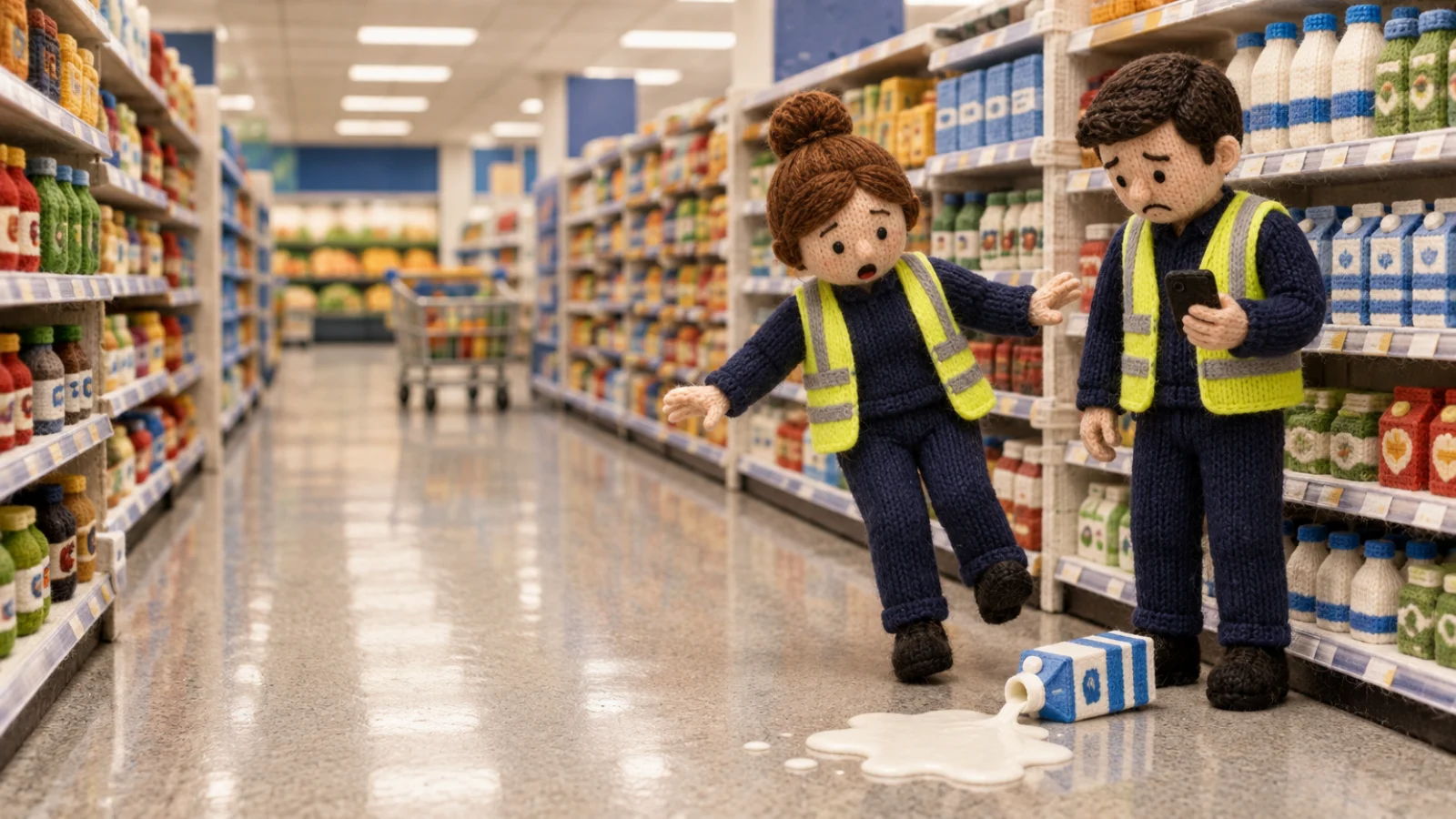
A knitted-wool illustration of a supermarket aisle with spilled milk beside a dropped carton. One worker has just stopped short of slipping, arms out, while a colleague takes out a phone to report it.

Solutions / Incident reporting

Get the report in while it is still fresh.

For anyone who sees something. Point-of-work capture in plain words, delivering high-fidelity records you can act on immediately.

  • Anyone can report from their phone

  • See which controls are really working

  • Fixes are checked before they're closed

  • Your information stays private to you

The problem in your words

Does any of this sound familiar?

  • Too long to report

    The form takes longer than the job did.

    Long forms and codes nobody knows. So people tell a mate, and nothing gets written down. The next person to walk past has no warning.

  • Heard about too late

    I found out a week later, in the canteen.

    By the time it reaches you, the floor is clean, the shift has changed and nobody quite remembers. You are left asking around.

  • Half the story

    I can't tell what they saw and what someone added.

    Notes get retyped and tidied on the way up. When you read them, you can't tell whose words they are, or which details someone guessed.

Easy to report. Easy to act on.

  • Too long to report

    Report it at the point of work, in your own words

    Whoever sees it starts with what happened. They can type it or say it out loud, on mobile, tablet or desktop, and there is nothing to install. If someone is hurt or in danger, the screen tells them to call for help first.

  • Too long to report

    A code on the wall

    Print a poster with a code for that place. Scan it, sign in, and the report opens with the place already filled in. Nobody has to hunt through a list of sites.

  • Heard about too late

    The right people hear about it

    Set your own rules for who is told when a report comes in: whoever looks after that site, the investigators there, or the people you name. You change the rules on a screen, with no code.

  • Half the story

    Every part says who supplied it

    Before it is sent, the report reads back. Each part is marked as the reporter's own or as suggested by Petey, our assistant. The reporter can change any of it before it goes.

    On a phone, the Check and send screen of a near-miss report, scrolling through the parts, each marked You or Suggested by Petey.

    Before it goes, the whole report reads back, each part marked yours or Petey's.
  • Heard about too late

    Graded by what could have happened

    A near miss is graded by the worst it could have been, not by luck. You see the energy involved, how it happened and how the barriers did. A person can always grade it differently.

    An investigator opens a forklift near miss and its severity review: motion energy, struck by a moving vehicle, directly exposed, the barrier degraded, and Petowo computing it as a potential serious injury, which the person can grade differently.

    A near miss is graded by what could have happened, not by luck.
  • Make it yours

    Event types and their questions come ready to use. Rename them, add your own or retire the ones you do not need. An update never overwrites what you have changed.

Works with what you do already

A report never sits on its own.

When a report is filed, Petowo looks for other records that share something with it and lists them beside it, saying what they share.

Potentially relevant

  • Other reports

    Filed within 90 days, before or after, with the same place, activity, control or category.

  • Risk assessments and procedures

    For the same activity, place or control.

  • Walks and audits

    At the same place, or on the same control.

  • Actions and training

    That share the activity, the place or the people named on the report.

Petowo shows what these records have in common. Your people decide what it means.

Standards it helps you evidence

Petowo keeps the records. It does not certify you, and your auditor makes the judgement.

ISO 45001, clause 10.2
Helps you evidence that incidents were reported, looked into and acted on, with the records kept.

What people ask us

Do reporters need an account?

Yes, but it costs nothing. People who report are guests, and guests are free with no limit. You invite them, and they sign in with a six-digit code sent to their email, so there is no password to remember. Nobody can sign themselves up, which keeps your records to the people you chose.

What if there is no signal?

What someone writes is saved on the device as they go, and the screen tells them so. If the signal drops, words stay safe locally. When the signal returns, they can pick up where they stopped and send the report.

Can we keep our own categories and severity scale?

Yes. Event types, their questions and your severity scales come ready to use, and you can rename them, add your own or retire the ones you do not need. You do it on a screen, with no code. An update from us never overwrites what you have changed.

We have years of reports in a spreadsheet. Can we bring them?

Yes. An administrator can import a CSV file: match its columns to the fields on a report, look at a preview, then bring it in. Petowo keeps the mapping, so your next file goes in the same way.

Does Petey write the report for people?

No. The story stays in the reporter's own words. Petey can fill in details from those words, such as the type of event, and anything it fills in is marked as suggested. The reporter can change it before they send, and whoever reads the report can see which parts were which.

Who can read a sensitive report?

A case can be marked as confidential, so only the case team, the people named on it and administrators can read it. A legally privileged case goes further: only named legal counsel and the case team can read it, and administrators are left out unless they are named.

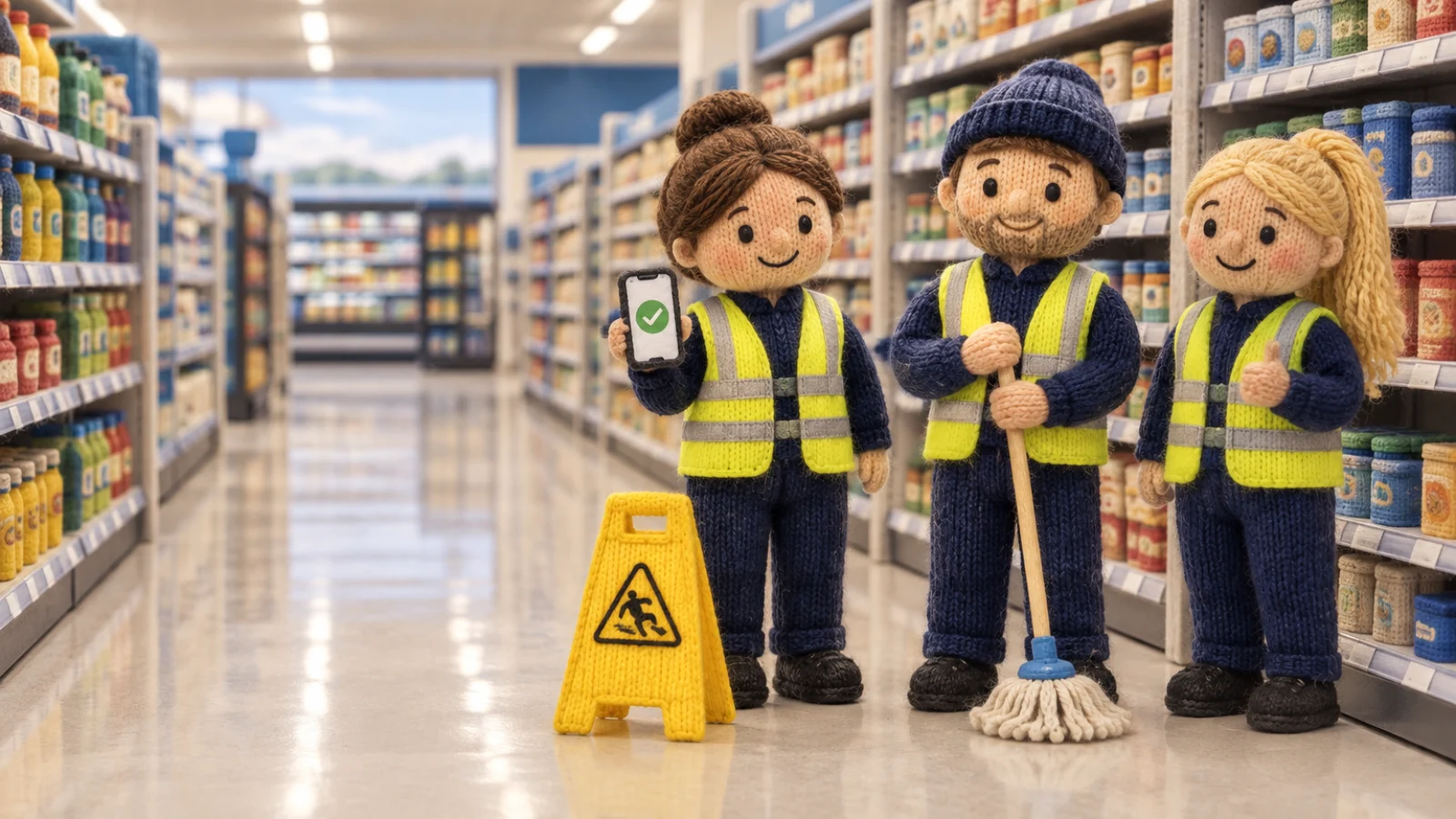
The same knitted-wool aisle, clean and dry, with a yellow wet-floor sign. One worker shows a phone with a green tick, the team leader holds a mop, and all three give a thumbs up.

Reported in a minute. Mopped, signed and sorted.

Bring a recent report from your own site, and we will walk it through Petowo with you.