PetowoPetowo
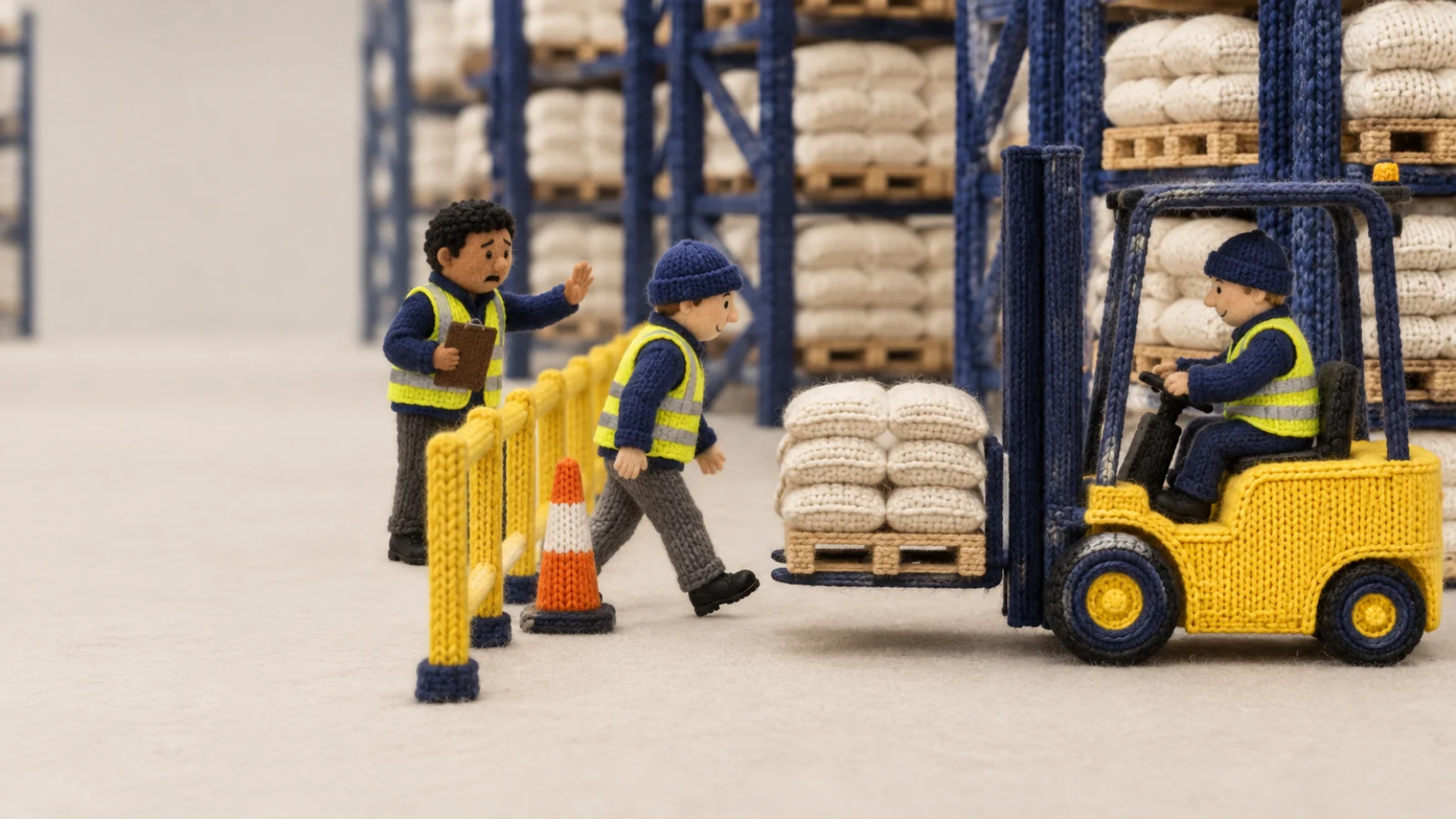
A knitted-wool illustration of a warehouse aisle. A yellow forklift reverses past a cone while one worker raises a hand to stop it and a supervisor with a clipboard looks on, worried.

Industries / Logistics & warehousing

Keep people and forklifts apart, on every shift.

For depots, warehouses and fulfilment centres. Report a near miss from the aisle, and see which barriers are still holding at every site.

  • Anyone can report from their phone

  • See which controls are really working

  • Fixes are checked before they're closed

  • Your information stays private to you

The problems you know

Does any of this sound familiar?

  • People and forklifts

    The walkway stops where the racking starts.

    Pickers cross the aisle with one eye on the scanner. A forklift reverses. Everyone says it was close, then carries on.

  • The loading bay

    The trailer crept, and nobody wrote it down.

    A dock light gets ignored on a busy night. The driver wants to be away, and the pallet truck is already rolling.

  • Depot to depot

    Every depot keeps its own book.

    One site logs racking strikes. Another only logs injuries. Nobody can lay them side by side and ask what is going on.

From the aisle to every depot.

  • People and forklifts

    Report it before the shift moves on

    A picker reports the near miss from the aisle, in their own words. They can type it or say it. Before it goes, the report reads back and shows which parts are theirs.

    On a phone, the Check and send screen of a near-miss report, scrolling through the parts, each marked You or Suggested by Petey.
    Before it goes, the whole report reads back, each part marked yours or Petey's.
  • People and forklifts

    Graded by what could have happened

    A forklift that missed someone is not a small event. Grade it by the energy involved and the worst it could have been, and a person can always grade it differently.

    An investigator opens a forklift near miss and its severity review: motion energy, struck by a moving vehicle, directly exposed, the barrier degraded, and Petowo computing it as a potential serious injury, which the person can grade differently.

    A near miss is graded by what could have happened, not by luck.
  • The loading bay

    See a walkway go from failing to holding

    Checks say the barrier is in place. Events say it did not hold. Raise the fix from the control, have someone else check the work, and watch the verdict change once a new inspection finds it in place.

    At Riverside Cross-dock, Barrier Health flags pedestrian segregation as in place but not holding. Its page shows every check found it in place, it failed in two incidents, and no near miss named it. The site manager raises a fixed barrier at aisle 4, someone independent verifies the work, a new inspection finds it in place, and the verdict turns to Holding.

    Checks said it was in place. Two incidents said it wasn't. Fixed, checked, and holding.
  • Depot to depot

    Every depot, the same measure

    Share one dashboard with your depot managers. Each person sees the depots their access allows, so a racking strike at one site can be read beside the same record at another.

    A site manager opens Analytics, chooses Shared with me, and opens the Site safety this quarter dashboard with its charts.

    Share a dashboard with a group. Each person sees what their access allows.
  • Your words, your sites

    Logistics has a ready-made set-up. It brings forklifts, racking, loading docks, picking and yard movements, with their hazards and controls, five kinds of warehouse incident and a safety walk. Name your depots and zones your way, rename or retire anything, and an update never overwrites what you have changed.

What people ask us

Our agency staff change every week. Can they report?

Yes. Invite them as guests, and guests are free with no limit. They sign in with a six-digit code sent to their email, so there is no password to forget. A printed code on the wall can open the report with the place already filled in.

Do we have to start from nothing?

No. The logistics set-up comes with forklifts, racking, docks, picking and yard movements, along with their hazards and controls. Keep what fits, rename what does not, and add your own.

Can we check racking and forklifts on a schedule?

Yes. Start from a ready-made pre-use check or build your own, and set how often each place is walked. Answers and photos stay on the device until there is signal, so a far corner of the shed or yard is not a problem.

Does Petowo plan our traffic routes?

No. It has no traffic management feature. It records the near miss, links it to the control it is about, such as the walkway or the dock light, and checks the fix. You still plan the routes.

Can we bring in our old near miss log?

Yes. An administrator can import a CSV file: match its columns to the fields on a report, look at a preview, then bring it in. The platform keeps the mapping for your next file.

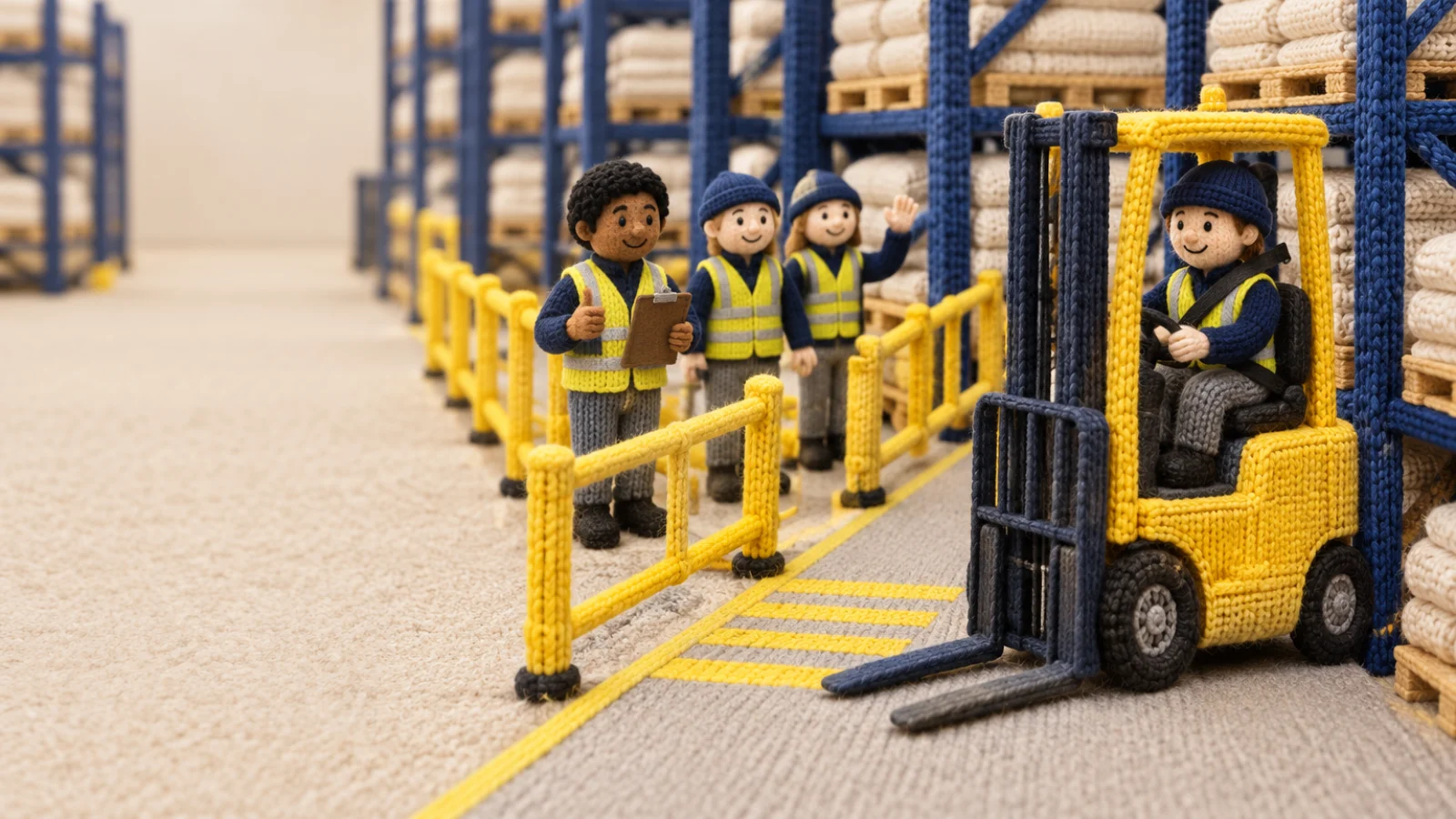
The same knitted-wool warehouse, tidy, with a yellow guard rail along the racking. Three workers in hi-vis vests smile and wave beside the parked forklift, one giving a thumbs up.

The barrier is back. The aisle is calm.

Bring a recent near miss from your own site, and we will walk it through Petowo with you.