PetowoPetowo
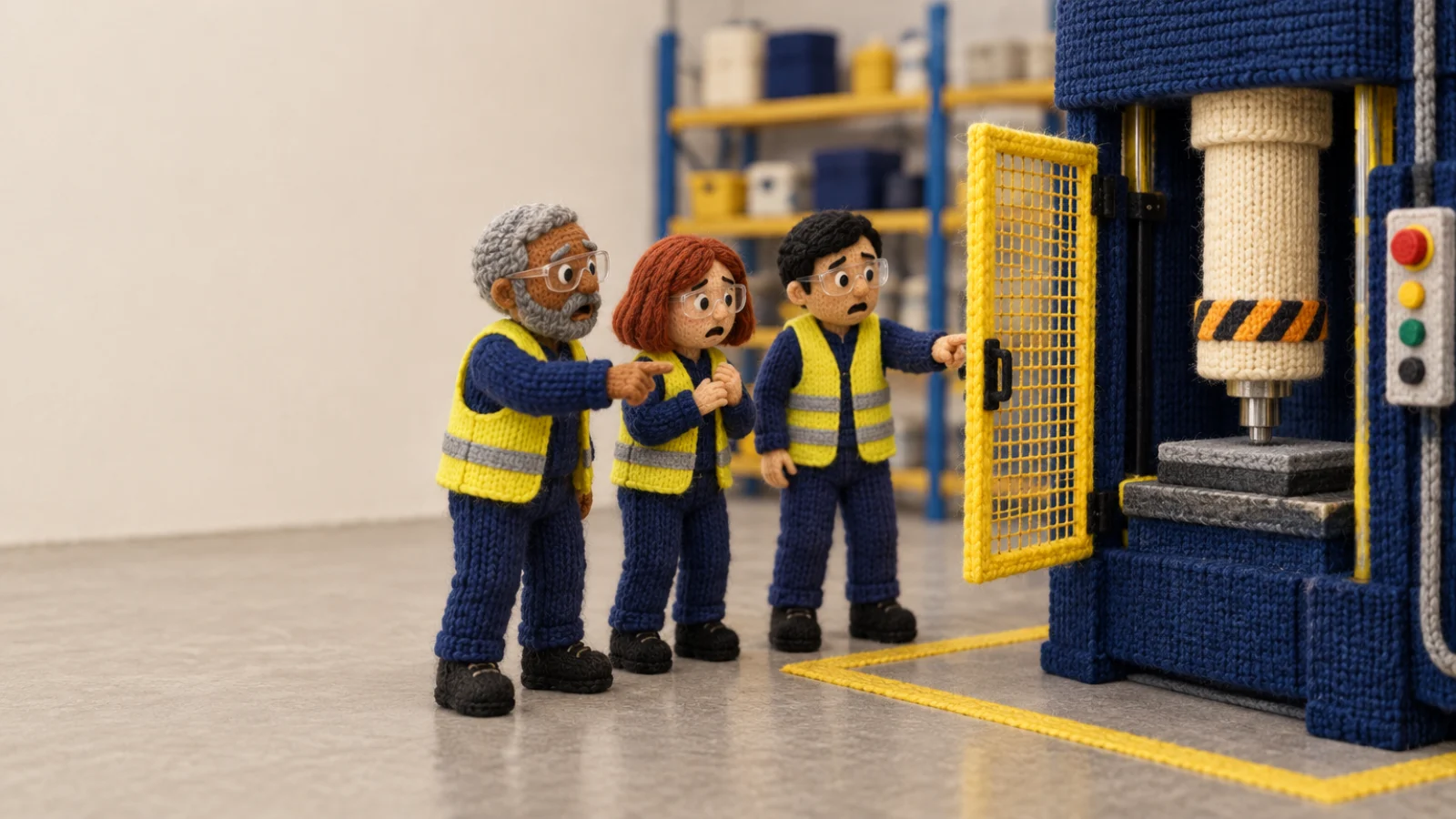
A knitted-wool illustration of a factory floor. A hydraulic press stands with its yellow mesh guard door open. Three workers in hi-vis vests look at it, worried, and one points at the open guard.

Industries / Manufacturing

Keep the guards closed and the line running.

For plants, factories and production lines. Report from the shop floor, and see which machine guards are holding on every line.

  • Anyone can report from their phone

  • See which controls are really working

  • Fixes are checked before they're closed

  • Your information stays private to you

The problems you know

Does any of this sound familiar?

  • Guards

    Everyone knows that gate gets propped.

    The interlock slows the job, so someone wedges it. It stays that way until the wrong person is standing there.

  • Clearing a jam

    It'll only take a second.

    The line has stopped and the target is on the board. Isolating takes longer than the fix, so the hand goes in.

  • Shift to shift

    The last shift saw it too.

    Nights tell days, days forget, and nights find it again. Nothing is written down, so nobody ever owns it.

Every guard, every line, every shift.

  • Guards

    See which guards are holding

    Each report lands on the control it is about, such as a press interlock. Barrier Health sets what your checks found beside what events said, line by line.

    Barrier Health lists each control with its verdict. Pedestrian segregation is in place on every check but did not hold in two events.
    Checks say a control is in place. Events say whether it held.
  • Clearing a jam

    Locked, tagged and verified

    Record each isolation point with its lock and tag number. The holder applies it, and it is verified before anyone reaches in. A point cannot be restored while a permit that depends on it is still open.

  • Shift to shift

    Written down before the shift ends

    Whoever sees it reports it from the shop floor, in their own words, by typing or by talking. The next shift can read what was seen, and who said it.

    On a phone, the Check and send screen of a near-miss report, scrolling through the parts, each marked You or Suggested by Petey.

    Before it goes, the whole report reads back, each part marked yours or Petey's.
  • Shift to shift

    One owner, across every shift

    Each fix has one owner and one due date, whichever shift it starts on. When the work is done, someone who neither owns it nor did it checks it.

    The actions list, then one action that is closed only after an independent verification step done by someone other than its owner.

    Closed means checked, by someone who did not do the work.
  • Your words, your sites

    Manufacturing starts from the general set-up. We then set it up in your words: your plants, lines and cells, your machines, your event types and your lists. Keep your own risk matrix. An update never overwrites what you have changed.

What people ask us

Can we keep track of the chemicals we use?

Yes. The chemicals register keeps each substance with where it is held, how much, its hazard class and when its safety data sheet was last revised.

Does it connect to our machines?

No. Petowo records what people report, check and fix. It does not read your PLCs or your interlocks. Reports and checks come from your people.

Can we check guards on a schedule?

Yes. Start from a ready-made pre-use check or build your own, and set a walk every so many days for each place. A problem answer can become an action on the spot.

We already have a quality system. Does this overlap?

Petowo looks after safety records, and it has a board for safety, quality, delivery and cost huddles. It does not replace your quality system, and your product records stay where they are.

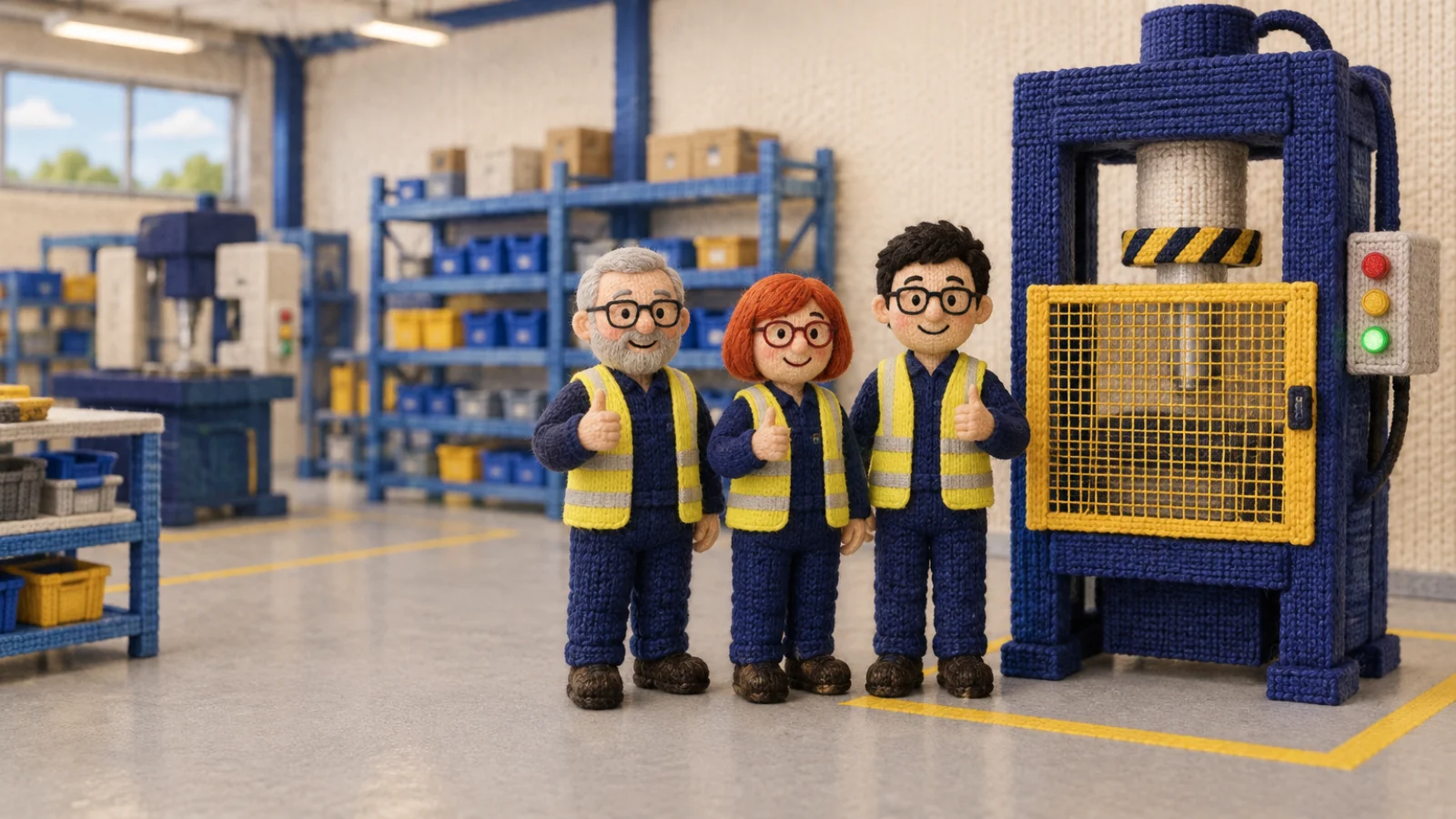
The same knitted-wool press with its mesh guard closed and a green light on the control panel. The three workers smile and give a thumbs up.

Guard shut. Green light. Line running.

Bring a recent event from your own plant, and we will walk it through Petowo with you.